



Blog
We’re glad you’re here!
Breathe deeply, grab your preferred coffee mug, and look through our blog.



It’s 2026 — Laravel Remains Rock-Solid for Backend Development

Dante Bui
December 16, 2025
Let’s admit it.
We’ve always been obsessed with the next framework.
In the meantime, Laravel has done something quietly impressive: it has stayed relevant, trusted, and widely adopted for over a decade.
While other backend technologies rise fast and fade just as quickly, Laravel continues to power real businesses, real products, and real teams—year after year. This isn’t nostalgia. It’s the result of deliberate design decisions that align with how software is actually built and maintained.
1. Opinionated structure that scales teams, not just code
Laravel is unapologetically opinionated. It enforces MVC, naming conventions, directory structures, and clear separation of concerns.
This matters less for solo developers—and a lot for teams.
Invoice Ninja, a widely used open-source invoicing platform serving tens of thousands of businesses, is built on Laravel. Its maintainers frequently cite Laravel’s structure as key to keeping a large, community-driven codebase readable and maintainable.
When developers rotate in and out, the framework acts as institutional memory. That’s not accidental—that’s design.
2. Productivity-first philosophy (without sacrificing quality)
Laravel’s biggest strength is that it optimizes for developer time, not just raw performance benchmarks.
Out of the box, Laravel gives you:
- Authentication & authorization
- Validation & request handling
- Background jobs & queues
- Scheduling, caching, and events
Most backend work isn’t about solving novel computer science problems. It’s about delivering business logic cleanly and reliably.
Laracasts, the largest PHP education platform in the world, runs entirely on Laravel. The platform continuously ships new features, content systems, and payment flows—proof that Laravel excels in fast-moving product environments.
Laravel reduces boilerplate so teams can focus on what they’re building, not how to wire it together.
3. An ecosystem that reduces long-term risk
Laravel’s ecosystem is not an afterthought—it’s a competitive advantage.
Official tools like:
- Horizon (queue monitoring)
- Sanctum / Passport (API auth)
- Cashier (subscriptions)
- Forge / Vapor (deployment)
…dramatically reduce the need for third-party glue code.
Statamic, a commercial CMS used by enterprises and agencies, is built on Laravel. By leveraging Laravel’s ecosystem instead of reinventing infrastructure, Statamic’s team focuses on product value rather than plumbing.
In business terms: fewer dependencies, fewer unknowns, lower maintenance cost.
4. Predictable upgrades and long-lived products
Laravel’s release cycle is disciplined:
- Clear LTS versions
- Detailed upgrade guides
- Backward compatibility as a priority
This is crucial for companies running software for years—not startups chasing MVPs.
October CMS, a Laravel-based CMS launched in 2014, has survived multiple major PHP and Laravel versions without needing a rewrite. That’s the quiet proof of framework stability.
If your product lifespan is measured in years, Laravel respects that reality.
5. Laravel scales when architecture scales
Laravel’s scalability myth usually comes from misunderstanding.
Laravel doesn’t prevent scale—poor architecture does.
Laravel supports:
- Stateless HTTP applications
- Redis, queues, and caching
- Horizontal scaling
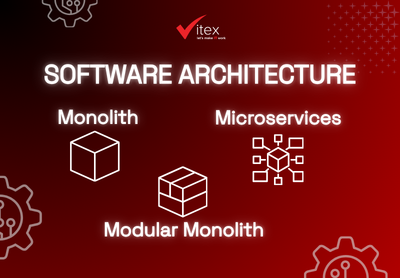
- Modular monoliths and microservices
Many SaaS platforms running on Laravel Vapor (AWS Lambda) handle traffic spikes without traditional servers. Vapor itself is built by the Laravel team, and it proves Laravel can operate comfortably in serverless, cloud-native environments.
Scaling is an engineering discipline, not a framework checkbox.
6. Modern PHP is a strength, not a liability
PHP 8+ is fast, typed, and mature. Laravel benefits directly from:
- JIT compilation
- Strong typing
- Huge performance improvements over PHP 5/7
Laravel’s evolution closely tracks PHP’s evolution, meaning you get performance gains without rewriting your application.
BookStack, an open-source documentation platform used by enterprises and governments, runs on Laravel and PHP 8. It serves large installations while maintaining readability and contributor friendliness.
PHP’s past reputation no longer reflects its present reality.
7. A global talent pool that lowers business risk
From a hiring perspective, Laravel is extremely practical:
- Large global developer base
- Strong documentation
- Consistent coding patterns
For companies outsourcing, expanding, or planning succession, this matters more than cutting-edge novelty.
Many digital agencies and IT outsourcing firms across Europe and Southeast Asia standardize on Laravel precisely because onboarding time is low and developer availability is high.
Framework popularity is not vanity—it’s operational security.
8. Perfect fit for SaaS and API-driven products
Laravel excels at:
- CRUD-heavy systems
- B2B platforms
- Marketplaces
- Internal tools
- API-first architectures
Its request lifecycle, validation, and authorization model map naturally to real business needs.
Envoyer, Laravel’s own zero-downtime deployment tool, is a Laravel SaaS used by thousands of companies. It’s a strong example of Laravel building and running its own commercial-grade infrastructure.
Frameworks that can’t support their own products rarely age well.
9. Strong leadership and a stable vision
Laravel benefits from rare continuity in open source.
Taylor Otwell’s leadership ensures:
- No unnecessary rewrites
- No hype-driven pivots
- Long-term consistency
This stability shows in adoption curves and community trust.
Laravel has avoided the “rewrite every two years” trap that has fractured many JavaScript and backend ecosystems. That restraint is a feature.
10. Laravel is boring—and that’s why it wins
Laravel doesn’t chase trends.
It doesn’t try to impress on Hacker News.
It doesn’t sacrifice clarity for cleverness.
It’s boring technology—and boring technology is what runs successful businesses.
Laravel remains solid because it aligns with any changes and evolution in teams, products, business needs, coding architecture.
Frameworks come and go. Laravel endures because it solves real problems for real teams—quietly, consistently, and well.
If your goal is to build backend systems that last, Laravel remains one of the safest and smartest choices you can make.
Vitex has been among the top Laravel experts from Vietnam. It can be said that we’ve “been here done that” with most modern frameworks, yet our colleagues and partners still choose Laravel as a foundation for their dream system. We’d love to share our building experience and study cases. Let’s talk!




WRITE A COMMENT