



Blog
We’re glad you’re here!
Breathe deeply, grab your preferred coffee mug, and look through our blog.



Software Development Trends to Watch in 2026

Dante Bui
December 25, 2025
For many organizations, software development has quietly shifted from being a technical function to a core business capability. Products, operations, customer experience, and even internal decision-making now depend on software behaving reliably under constant change. As we approach 2026, this reality is reshaping what “modern software development” actually means.
The most important trends ahead are not defined by flashy new frameworks or radical inventions. Instead, they reflect a more mature phase of the industry – one where speed must coexist with trust, automation with accountability, and flexibility with control. Understanding these shifts does not require deep technical knowledge, but it does require a clearer view of how software is evolving as a system.
AI Is Becoming a Permanent Part of the Development Process – With New Responsibilities
Artificial intelligence is already embedded in many development workflows, particularly through coding assistants that help generate, refactor, and review code. What is changing in 2026 is not the presence of AI, but the way teams relate to it. While AI can significantly accelerate development, many developers report spending additional time validating its output, especially where logic, security, or business rules are involved.
This tension reveals an important truth: AI is not replacing human judgment; it is amplifying the consequences of poor processes. Organizations that treat AI as a shortcut often struggle with quality and trust. Those that treat it as a structured collaborator, with clear review standards and accountability, gain speed without sacrificing reliability.
For business leaders, this means AI-driven development should be seen less as a cost-saving tool and more as a productivity multiplier that still requires strong governance. The competitive advantage in 2026 will not come from “using AI,” but from using it in a way that aligns with business logic and risk tolerance.
Low-Code and No-Code Reflect a Broader Shift Toward Business-Led Software
The rise of low-code and no-code platforms is often framed as a technical trend, but its roots are organizational. Many companies face growing pressure to deliver digital solutions faster than traditional development cycles allow, while qualified engineers remain scarce. Low-code tools respond to this gap by enabling business teams to participate directly in building software.
What is evolving now is the role these tools play. Rather than being limited to small internal applications, low-code platforms are increasingly connected to core systems, data sources, and customer-facing workflows. This shift brings both opportunity and risk. Without architectural oversight, low-code can fragment systems and create hidden maintenance costs. With the right structure, it becomes a bridge between business intent and technical execution.
In 2026, successful organizations will treat low-code as part of a broader development ecosystem, not a parallel shortcut. The focus will move from speed alone to sustainability, integration, and shared ownership between IT and business teams.
Cloud-Native Development Is No Longer About Scale. It’s About Control
Cloud-native architectures have become the default choice for new software systems, offering flexibility, resilience, and rapid deployment. Yet as adoption matures, many organizations are discovering that complexity grows just as quickly as capability. Distributed systems can be powerful, but they also demand discipline in monitoring, cost management, and operational design.
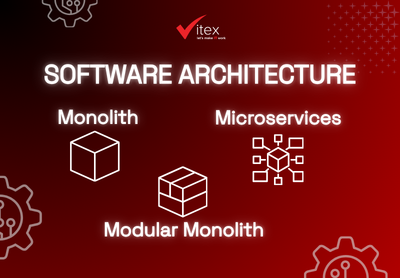
The conversation heading into 2026 reflects this learning curve. Rather than pursuing microservices or serverless architectures by default, teams are becoming more selective, choosing designs that serve specific business needs. Simpler systems, when possible, are increasingly valued over highly fragmented ones.
For decision-makers, this trend highlights a shift in priorities. Cloud technology is no longer about proving technical sophistication; it is about building systems that teams can understand, maintain, and evolve over time.
Security Is Moving Closer to the Business Conversation
As development accelerates through automation and AI assistance, security risks become more tightly coupled with everyday decisions. Research has shown that AI-generated code can introduce vulnerabilities if it is not carefully reviewed, reinforcing the need for security practices that are embedded throughout the development lifecycle.
This is driving the wider adoption of DevSecOps, where security is treated as a continuous responsibility rather than a final checkpoint. Importantly, this shift also changes who needs to understand security. In 2026, product managers, operations leaders, and even non-technical stakeholders increasingly influence decisions that affect data protection and compliance.
From a business perspective, security is no longer just a technical safeguard; it is part of risk management and brand trust. Organizations that integrate security thinking early reduce both operational disruption and long-term cost.
Technology Choices Are Becoming More Conservative
One notable trend across development teams is a preference for tools that prioritize stability and maintainability over novelty. Languages like TypeScript continue to gain adoption because they reduce errors in large systems, while technologies such as Rust are chosen for environments where safety and performance matter. Similarly, well-established databases remain popular due to their reliability and ecosystem support.
This does not indicate stagnation. Rather, it reflects a more pragmatic approach to software investment. In 2026, technology decisions are increasingly evaluated based on their long-term impact on teams, not just short-term productivity gains.
For organizations, this means fewer disruptive rewrites and more incremental improvement – a shift that supports continuity and knowledge retention.
Edge Computing and WebAssembly Extend Software Beyond the Cloud
As digital services expand into physical environments, from connected devices to location-sensitive applications, processing everything in centralized data centers is not always practical. Edge computing addresses this by enabling computation closer to where data is generated, improving responsiveness and resilience.
At the same time, WebAssembly is emerging as a flexible runtime that allows software to run consistently across different environments. While often invisible to end users, these technologies enable applications to function reliably even under connectivity constraints.
For businesses, the significance lies in experience rather than infrastructure. Faster responses, lower latency, and better offline behavior translate directly into usability and trust, particularly in regions with uneven network quality.
Blockchain Is Settling Into a Supporting Role
After years of hype and polarized opinions, blockchain is entering a quieter, more grounded phase. By 2026, its role in software systems is less about disruption and more about dependability. Enterprises are no longer asking whether blockchain will “change everything,” but where it can add measurable value without increasing operational complexity.
What is emerging instead is blockchain as an invisible infrastructure layer. In supply chains, it helps verify the origin and movement of goods without requiring every participant to understand the underlying technology. In identity systems, it strengthens trust by ensuring credentials cannot be altered after issuance. In regulated industries, it offers tamper-resistant records that simplify audits and compliance rather than creating new technical burdens.
This shift reflects a broader maturation of enterprise software. Technologies that endure are not those that demand attention, but those that quietly reduce risk. Blockchain’s success in 2026 will be judged not by how often it is mentioned in strategy decks, but by how rarely it causes disputes over data integrity. When implemented well, it becomes part of the system’s backbone, noticed only when it is missing.
Progressive Web Apps Balance Reach and Efficiency
As digital services expand to reach broader and more diverse user groups, organizations are rethinking how much complexity they truly need. Progressive Web Apps (PWAs) continue to gain traction because they address a practical concern shared across industries: how to deliver reliable digital experiences without maintaining multiple, costly application versions.
PWAs sit comfortably between traditional websites and native apps. They load quickly, work across devices, and can function under unstable network conditions – an important consideration in many emerging markets and remote operating environments. For users, the experience feels seamless and familiar. For businesses, the benefits are operational: lower development costs, simpler updates, and faster iteration cycles.
By 2026, the appeal of PWAs reflects a wider software development mindset. The focus is shifting from technical sophistication for its own sake to solutions that scale efficiently. Organizations are increasingly asking not “What is the most advanced option?” but “What can we maintain, improve, and evolve over time?” In many cases, PWAs answer that question with clarity and restraint.
Platform Engineering Brings Order to Growing Complexity
As software systems grow, complexity does not increase linearly. It compounds. New services, tools, and teams introduce friction that slows delivery and raises the risk of errors. In response, platform engineering is emerging as a structural solution rather than a technical trend.
Internal platforms provide shared foundations for development teams: standardized deployment pipelines, security practices, and tooling that reduce cognitive load. Instead of every team reinventing workflows, platforms create consistency while preserving room for innovation at the application level.
Importantly, platform engineering is not about control. When designed well, it removes obstacles rather than imposing rules. New developers onboard faster, teams spend less time resolving environment issues, and leadership gains clearer visibility into system health. By 2026, organizations that invest in platform thinking are better positioned to scale sustainably, not because they move faster in the short term, but because they waste less effort over time.
Hybrid and Multi-Cloud Strategies Reflect a Desire for Flexibility
Cloud adoption is no longer a binary decision. As businesses mature, they encounter constraints related to cost optimization, data residency, regulatory compliance, and operational resilience. Hybrid and multi-cloud strategies are increasingly seen as pragmatic responses to these realities rather than signs of indecision.
By distributing workloads across environments, organizations gain the ability to adapt without major architectural overhauls. Sensitive data can remain on-premise or within specific regions, while less critical services leverage the scalability of public cloud platforms. This approach also reduces dependency on any single provider, offering leverage and resilience in an uncertain global landscape.
The rise of hybrid and multi-cloud strategies signals a more thoughtful approach to infrastructure. Instead of pursuing uniformity, organizations are prioritizing fit — aligning technical choices with business context. In 2026, flexibility is not a luxury but a safeguard against rapid change.
Looking Ahead
The defining software development trends of 2026 are not driven by spectacle. They are shaped by restraint, integration, and long-term thinking. As technology becomes deeply embedded across industries, the competitive advantage lies in building systems that adapt quietly to change while supporting real operational needs.
Across Asia and beyond, Vitex works with our partner to navigate this transition – from traditional businesses modernizing their operations to fast-growing companies seeking scalable foundations. Our focus is not on adopting technology for its own sake, but on translating complex capabilities into systems that teams can rely on, grow with, and trust over time.
In an environment where software increasingly defines how businesses operate, the ability to build thoughtfully, with clarity, context, and purpose, may ultimately matter more than speed alone.




WRITE A COMMENT