



Blog
We’re glad you’re here!
Breathe deeply, grab your preferred coffee mug, and look through our blog.



Australian Occupation Shortage List (OSL): Identifying Sectors Facing Difficulties

Hazel Nguyen
March 24, 2026
Understanding the OSL and Why It Matters
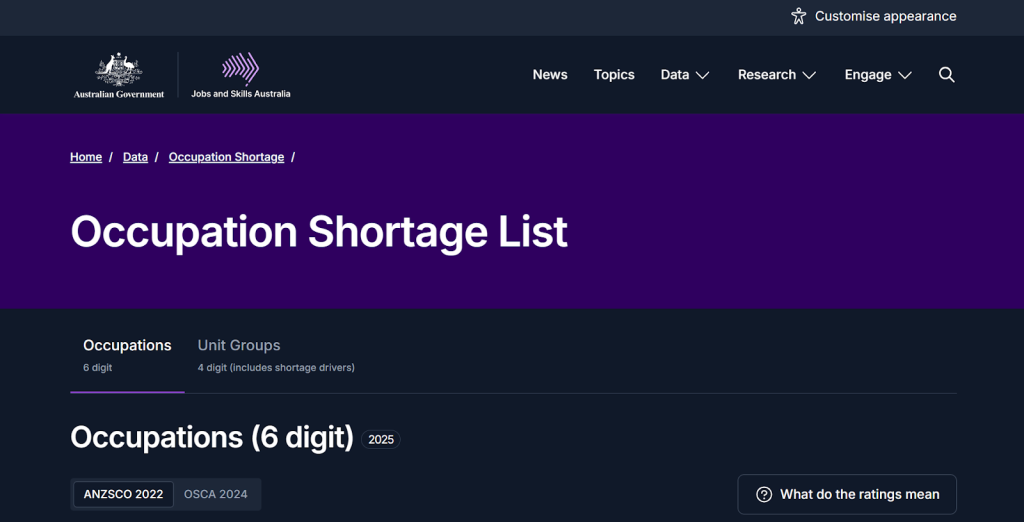
The Occupation Shortage List (OSL), published by Jobs and Skills Australia, is one of the most reliable indicators of labour market pressure in Australia.
For tech leaders, it functions as a forward-looking signal: which roles will be difficult to hire, which sectors may impact your operations, and how broader economic trends will shape your workforce planning.
The 2025 update shows shortages have eased overall, but 29% of occupations are still in shortage, a reminder that many skills remain structurally constrained.
The Sectors Facing Persistent Talent Gaps
Despite improvement, the data reveals deep and long-running shortages that have persisted from 2021 to 2025.
These shortages cluster in sectors with high entry barriers and long training pipelines, healthcare, engineering trades, scientific roles, and education. These fields require extensive qualifications or practical experience, making recovery slow even when demand stabilises.
For tech companies, these shortages matter because they influence everything from product delivery to cross-functional collaboration. When engineering technicians or specialist trades are hard to hire, timelines stretch and costs rise.
How ICT and Professional Roles Are Shifting
One of the most notable changes in 2025 is that many ICT and professional occupations moved off the shortage list.
This does not mean demand for tech talent is falling. Instead, it reflects:
- Productivity gains from automation and AI
- More structured upskilling and internal mobility
- Stabilising demand for some “traditional” ICT roles
However, the pipeline for emerging digital skills: AI, data science, cloud architectures, remains under pressure. These roles may not always appear on the OSL yet, but industry demand continues to grow faster than training pathways.
Regional Variation Still Shapes Hiring Outcomes
Shortages are not uniform across the country. Some sectors: construction trades, health professions, specialised technical roles, remain significantly constrained in regional areas. For tech leaders, this creates ripple effects:
- Delays in infrastructure-heavy deployments
- Dependency on external contractors
- Increased recruitment and retention costs
Understanding local labour dynamics is essential when planning new projects or expanding talent hubs.
What’s Driving These Shortages?
The latest OSL highlights several structural drivers:
1. Experience gaps, not just qualification gaps
Many applicants hold the right credentials but lack the practical or industry-specific experience employers need.
2. Weak retention in certain fields
Pay, workload and career progression gaps contribute to high turnover, particularly in service-driven sectors.
3. Training pathways that can’t keep up
Roles requiring years of education or apprenticeships naturally take longer to fill, making shortages more persistent.
For tech companies, this reinforces the importance of internal capability building, not just external hiring.
What Tech Leaders Should Do Now
The OSL is more than a snapshot, it’s a strategic guide.
Here’s how tech leaders can respond:
Invest in upskilling and retraining
Emerging digital roles will outpace supply. Building talent from within is more reliable than waiting for the market to catch up.
Improve employee experience
Retention challenges are a major driver of shortages. Competitive compensation isn’t enough, career pathways and growth matter.
Plan for cross-sector dependencies
Shortages in engineering, construction or technical trades can slow down tech initiatives that rely on physical infrastructure. Plan buffers and diversify partners.
Use the OSL as a forecasting tool
It helps anticipate where hiring will get harder, and when to adjust your workforce strategy.
If you are facing the same issue, shortage in skilled IT workforce! Contact Vitex now to avoid delays and accelerate your momentum!




WRITE A COMMENT