



Blog
We’re glad you’re here!
Breathe deeply, grab your preferred coffee mug, and look through our blog.



Vietnam’s 5G Dilemma: Investment Risk Rising?

Hazel Nguyen
April 2, 2026
Vietnam is pushing hard to accelerate nationwide 5G deployment. But new concerns from the European Union and foreign business groups highlight a critical issue: the involvement of major Chinese telecom vendors could make global companies more cautious about investing in the country’s digital economy.
This matters because Vietnam’s growth engine increasingly relies on foreign tech manufacturers, semiconductor expansion, and advanced service companies looking for a stable, trusted operating environment. When the infrastructure that powers future operations raises questions about security, compliance, and interoperability, investment decisions naturally slow down.
What the EU and Global Firms Are Worried About
Recent reports from Reuters and Asharq Al-Awsat show that European stakeholders warned Vietnam about the potential risks of depending on Chinese suppliers, particularly in core 5G network layers where sensitive data travels.
The concerns fall into three practical categories:
- Regulatory exposure: Companies operating in sectors like cloud, finance, or manufacturing must comply with strict EU and US data-protection rules. If Vietnam’s 5G backbone is built by vendors facing restrictions elsewhere, foreign firms fear regulatory conflicts.
- Supply chain continuity: Many global tech companies already avoid Chinese network equipment to ensure long-term operational stability. They prefer ecosystems aligned with their global infrastructure standards.
- Geopolitical spillover risks: Businesses do not want sudden disruptions due to sanctions, policy shifts, or cross-border tensions.
These concerns aren’t about “politics” alone, they directly influence cost, compliance, and business continuity.
Vietnam’s Balancing Act: Speed vs. Trust
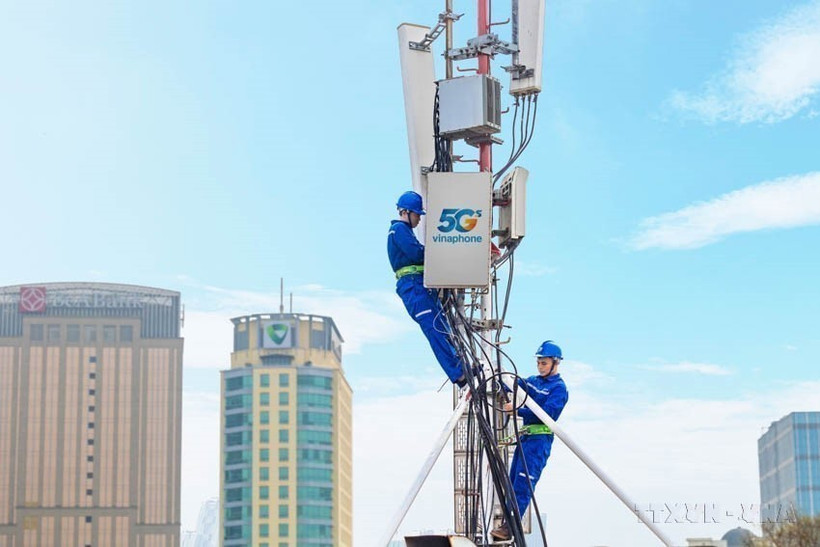
5G is accelerating digital innovation. Image source: Vietnam News Agency (VNA)
Vietnam wants fast and affordable 5G deployment. Chinese vendors offer competitive pricing and speed, which are hard for local operators to ignore. However, leaders understand that speed alone cannot outweigh long-term trust, especially if the goal is to attract high-quality foreign investment in cloud services, semiconductors, smart manufacturing, and digital services.
Vietnam has made major strides in becoming a global tech hub. But network decisions made today will affect investor confidence for the next decade.
Key Takeaway for Leaders Today
For global companies, Vietnam remains one of Southeast Asia’s strongest growth markets. But as the EU warns, vendor risk in critical infrastructure can influence market entry, data strategy, and digital expansion plans. Tech leaders should monitor how Vietnam navigates:
- Vendor diversification
- Compliance alignment with EU/US standards
- Security frameworks applied to national 5G rollout
And with Vietnam recently spotlighted by the Qualcomm–Viettel partnership to develop 5G AI-powered devices, foreign investors are watching even more closely to see whether the country’s network infrastructure will align with global security and compliance expectations. A transparent, multi-vendor approach could reassure investors while keeping network rollout on track.






WRITE A COMMENT