



Blog
We’re glad you’re here!
Breathe deeply, grab your preferred coffee mug, and look through our blog.



From Asset-Led to Software-Led: The Next Major Shift for Logistics in 2026

Dante Bui
January 6, 2026
For decades, logistics has been defined by what companies own. Fleets, warehouses, terminals, and long-term contracts formed the backbone of competitive advantage. Scale meant strength. Assets meant control. The more trucks you had on the road, the more routes you operated, the more market share you could defend.
That logic is no longer holding up.
Today, many logistics operators find themselves asset-rich but margin-poor. Costs continue to rise, volatility has become structural rather than cyclical, and operational complexity is stretching organizations beyond what manual coordination can reasonably handle. Assets are still necessary, but they are no longer sufficient.
As the industry looks toward 2026, a quiet but fundamental shift is underway: logistics is moving from being asset-led to becoming increasingly software-led. Not in the sense of replacing physical infrastructure, but in redefining where intelligence, decision-making, and competitive advantage truly sit.
When Assets Stop Being the Advantage
The cracks in the traditional asset-led model are no longer temporary disruptions. They are systemic.
Demand patterns have become harder to predict and quicker to change. Peak seasons stretch unpredictably. Cross-border flows are influenced by geopolitical tension, regulatory shifts, and sudden changes in trade policy. At the same time, assets remain rigid. Trucks cannot be scaled up or down overnight. Warehouses cannot relocate when demand shifts regions. Capital is locked into investments that assume a level of stability the market no longer provides.
Operationally, the problem compounds. A single shipment today may involve multiple carriers, handoffs, documentation systems, and regulatory checkpoints. Coordination costs rise faster than physical capacity. Many organizations still rely on fragmented tools — spreadsheets for planning, messaging apps for execution, email for exception handling — hoping human effort can bridge the gaps. It increasingly cannot.
Visibility gaps, once tolerated, now create real business risk. Not knowing where goods are, why delays occur, or how issues propagate across the network undermines trust with customers and partners alike. The result is a paradox: logistics companies invest heavily in assets, yet struggle to fully control or optimize how those assets are actually used.
The problem is not that assets have lost their value. It is that decision-making around those assets has become the bottleneck.
What Software-Led Logistics Really Means
When people hear “software-led logistics,” it is often misunderstood as a call to digitalize everything or replace human judgment with algorithms. In practice, the shift is far more grounded, and far more pragmatic.
Software-led logistics does not remove assets from the equation. It reframes their role. Assets execute. Software coordinates, learns, and decides.
In a software-led model, intelligence sits above physical operations. Software becomes the orchestration layer that determines which assets are deployed, when, and under what conditions. It connects planning, execution, and feedback into a continuous loop rather than a linear process.
This distinction matters. Many logistics systems today still treat planning as something done upfront, execution as something monitored, and problems as something fixed after the fact. Software-led approaches blur these boundaries. Planning adjusts continuously. Exceptions are anticipated, not merely reacted to. Decisions are informed by live operational signals rather than static assumptions.
The competitive advantage no longer comes from owning more trucks than your competitors. It comes from making better decisions with the same set of trucks.
Where Software Changes the Game in Daily Operations
The impact of software-led thinking becomes most visible in the unglamorous, day-to-day realities of logistics operations.
In planning, software enables dynamic adjustment rather than fixed schedules. Routes, capacity allocations, and resource priorities evolve as conditions change — weather, congestion, demand shifts, or partner constraints. This reduces the gap between plan and reality, which is where many inefficiencies are born.
In dispatch and routing, intelligence moves beyond finding the shortest path. Decisions increasingly balance service-level agreements, cost trade-offs, time sensitivity, and downstream risk. A route that looks optimal on paper may create cascading delays later in the network. Software helps surface these second-order effects before they become expensive problems.
Exception handling is another area where the difference is stark. In asset-led models, exceptions are often managed manually once they occur. Software-led systems focus on detecting patterns that signal elevated risk, repeated delays at certain nodes, consistent handoff failures, or abnormal dwell times, which allows teams to intervene earlier and more precisely.
Perhaps most importantly, software provides a shared operational language across partners. When data flows through a common system rather than being reinterpreted at every handoff, coordination improves without increasing human workload. This is critical in networks where no single company controls the entire chain.
The real leverage of software is not automation alone. It is reducing decision latency: the time between something changing in the system and the organization responding correctly.
Why This Shift Is Accelerating Toward 2026
The momentum behind software-led logistics is not driven by technology hype. It is driven by pressure.
Customers increasingly expect transparency once reserved for consumer delivery platforms: real-time tracking, accurate ETAs, proactive communication. These expectations are filtering into B2B logistics, raising the bar for service without necessarily raising prices.
Regulatory demands are also intensifying. Compliance, reporting, and traceability requirements add layers of complexity that manual processes struggle to absorb. Software becomes essential not to innovate, but simply to keep up.
At the same time, margins remain under pressure. Fuel costs, labor shortages, and infrastructure constraints limit how much efficiency can be extracted from assets alone. Growth without corresponding intelligence often leads to diminishing returns.
By 2026, logistics organizations that rely primarily on scale and physical expansion will find it harder to adapt. Those that invest in systems capable of learning, coordinating, and adjusting in real time will be better positioned to absorb volatility rather than be overwhelmed by it. In this sense, the shift is less about becoming “high-tech” and more about becoming resilient by design.
The Hard Truth: Software-Led Logistics Is an Organizational Challenge
Despite its promise, many software-led initiatives fail, not because the technology is inadequate, but because organizations underestimate the change required to support it.
Data is often fragmented across departments and partners. Processes vary by region, team, or customer. Accountability is unclear when decisions move from individuals to systems. Without addressing these fundamentals, software simply exposes existing misalignment rather than resolving it.
Tensions frequently emerge. Operations teams worry about losing control. IT teams struggle to balance stability with experimentation. Leadership expects rapid returns without investing in process clarity. These dynamics are not technical problems, but organizational ones.
Successful transitions recognize this early. They treat software as a mirror, revealing where assumptions, workflows, and incentives no longer align with reality. Addressing these issues requires patience, governance, and a willingness to rethink how decisions are made. Software-led logistics does not eliminate complexity. It forces organizations to confront it.
A Pragmatic Path Forward
The transition toward software-led logistics rarely fails because of technology. It fails because organizations try to move faster than their operational reality allows.
In practice, the most resilient transformations are incremental by necessity, not by caution. Logistics systems are deeply intertwined with people, partners, and legacy processes. Replacing everything at once often creates more fragility, not less.
What tends to work is a phased reorientation of decision-making.
Many organizations begin by addressing visibility, not as a dashboard exercise, but as a way to establish a shared operational truth across assets, teams, and external partners. Without this baseline, optimization efforts are built on assumptions rather than reality.
The next inflection point usually comes in exception management. Instead of treating disruptions as isolated incidents, software helps reveal recurring patterns: where delays originate, which handoffs break down, and where human intervention actually changes outcomes. This is often where teams realize that speed is less constrained by capacity than by attention.
Only once these foundations are in place does optimization meaningfully add value. Routing algorithms, automated allocation, and predictive planning are powerful, but only when fed by clean data, clear ownership, and stable processes.
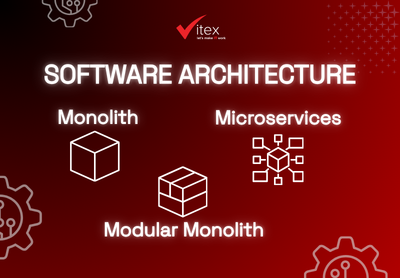
Crucially, software-led does not imply a single, monolithic platform. In logistics, rigidity is risk. Interoperable systems, well-defined boundaries, and clear accountability allow organizations to evolve without becoming locked into brittle architectures.
As logistics moves toward 2026, the most important shift may be philosophical. The industry is transitioning from optimizing assets to building systems that learn from operations.
In this emerging model, success is measured not only by how efficiently goods move today, but by how quickly organizations adapt tomorrow. Companies that can absorb disruption, recalibrate decisions, and coordinate across complex networks will hold a durable advantage, even with similar physical resources.
This is where thoughtful software design matters most. Not as a layer of abstraction, but as the connective tissue between data, people, and action.
Vitex often works alongside logistics and supply-chain teams facing this exact transition, not by imposing generic platforms, but by helping design systems that reflect how operations actually work on the ground. The future of logistics will still run on trucks, warehouses, and ports. But it will be led by software that knows how, and when, to use them.





WRITE A COMMENT